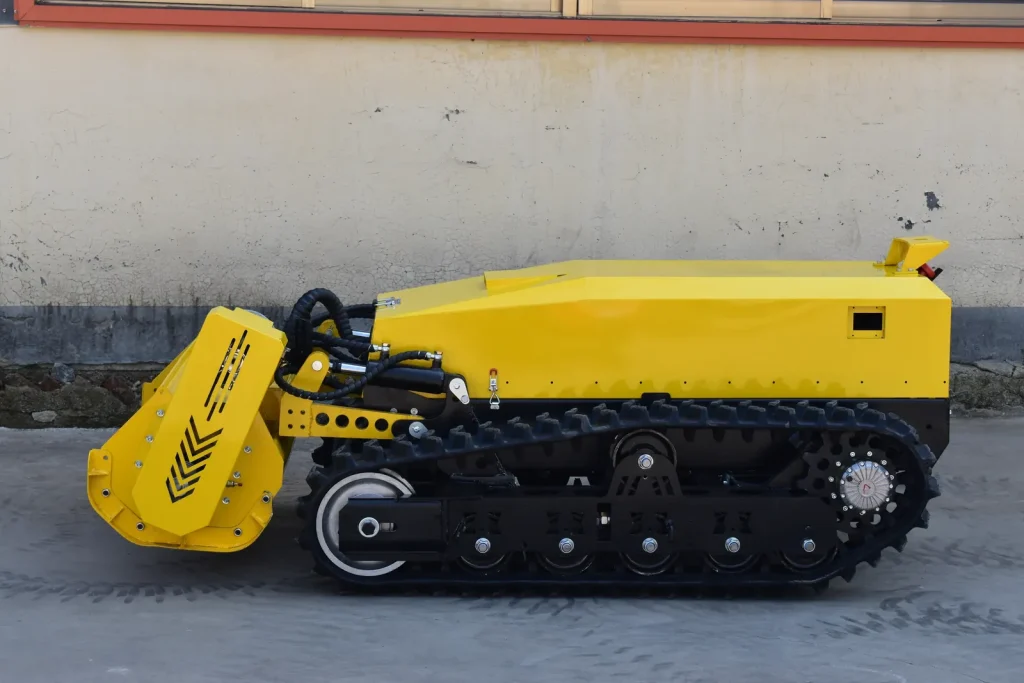

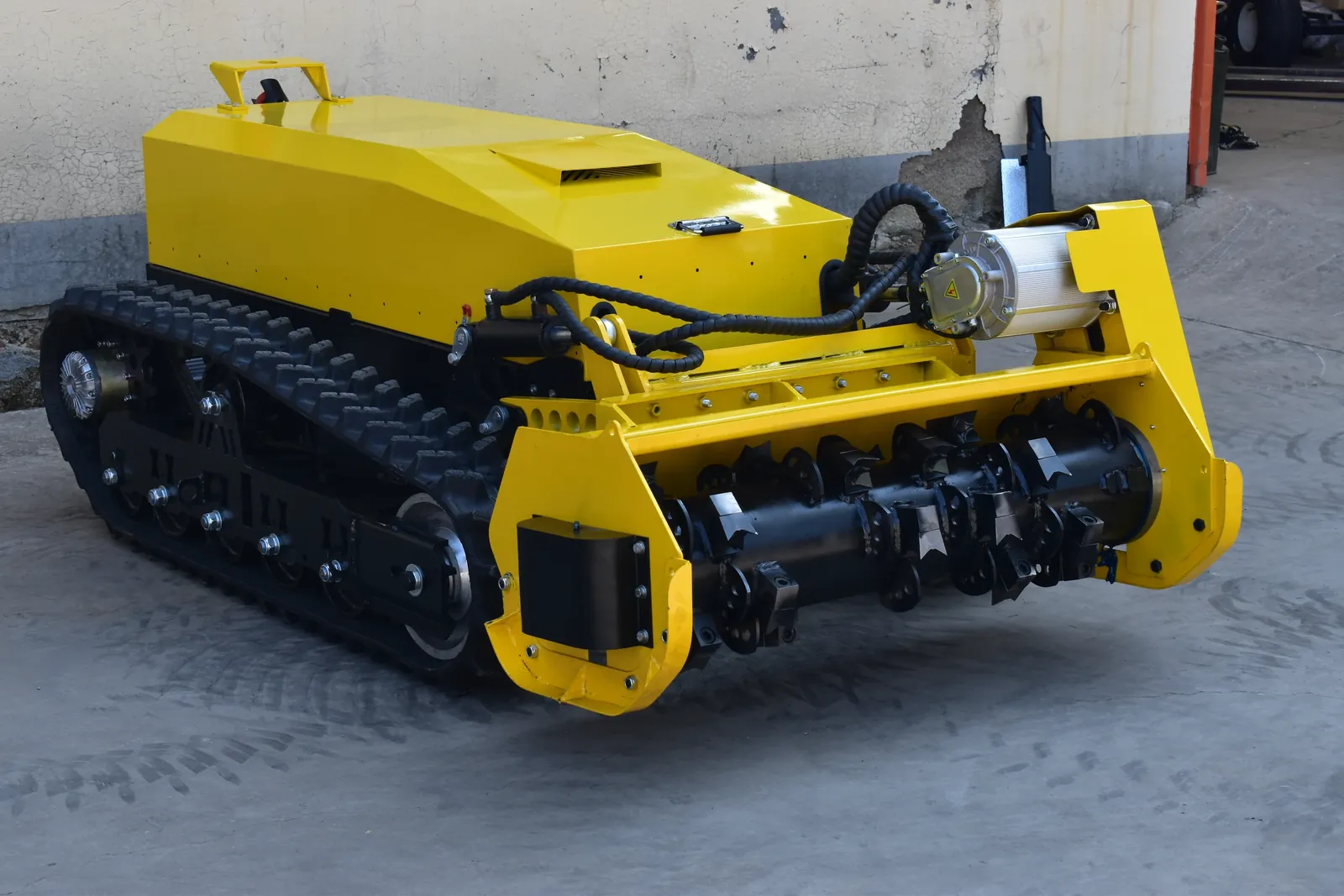
Our two-belt cutting drive connects the electric motor to the cutting shaft with two A-section belts. They carry the drive to the rotor and provide a replaceable component in the transmission.
We chose this arrangement with sudden cutting loads in mind. When the head meets resistance, that load travels back through the drive. The belt sits between the cutting assembly and more costly drive components, where it can play a part in managing an impact load.
From the motor to the cutting shaft
The belts carry motion from the motor pulley to the cutting shaft pulley. The load changes as the head moves through grass, brush and denser vegetation. Our design considers that changing load across the complete transmission.
We deliberately include the replaceable belt in that load path. The design intent is to help protect the drive by giving a service item a role in handling sudden resistance. An impact can still damage the cutting assembly or other parts, so the operator needs to respond promptly when cutting changes.
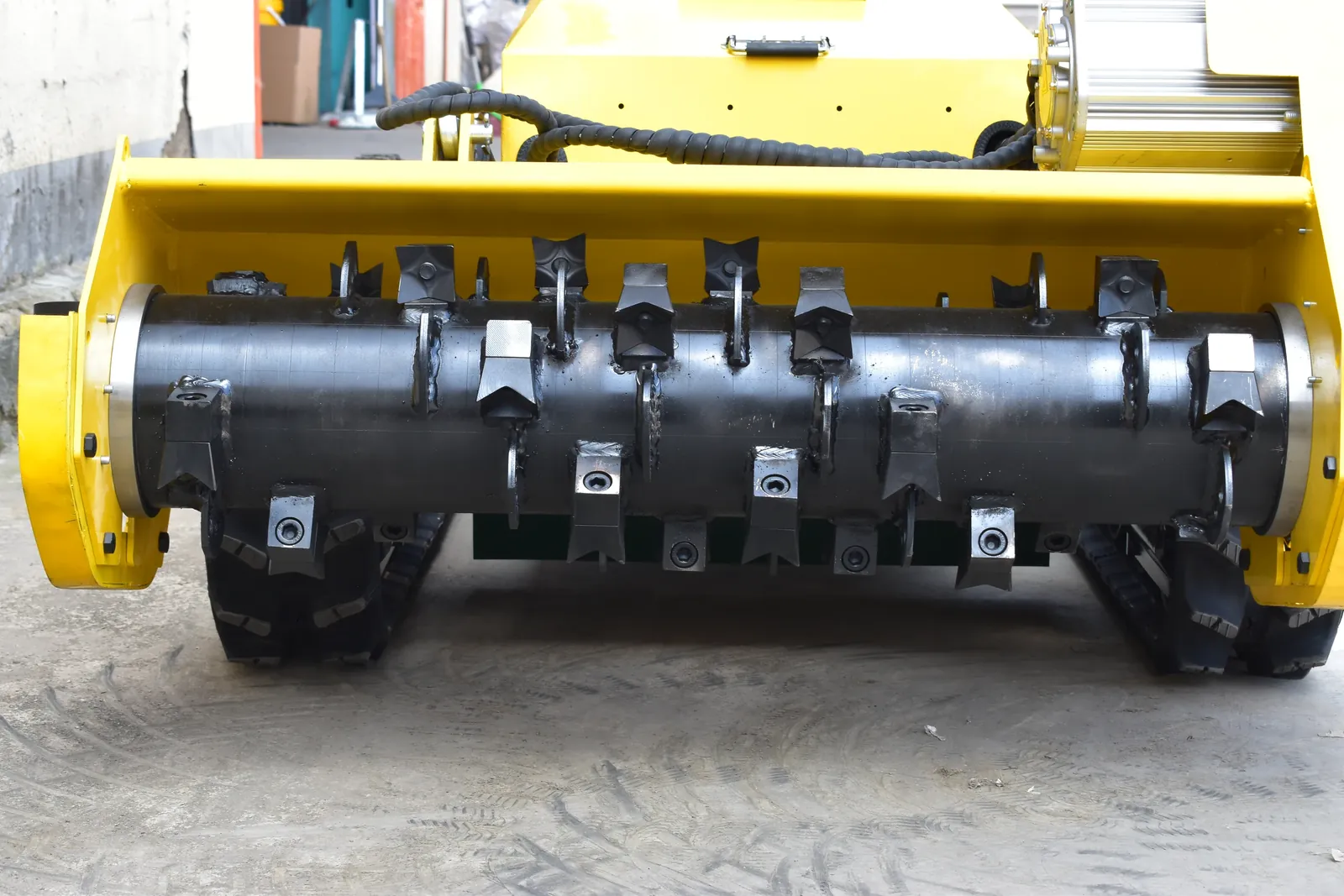
If a tool is missing or broken, stop the machine. Our operating guidance requires a complete, undamaged set of cutting tools. Check the cutting assembly as well as the transmission before returning to work.
Balance transmission and service access
Belt size and belt count affect the space occupied by the drive and the way it carries load. Our two A-section belts form part of the balance between power transmission, available space and a replaceable component in the load path.
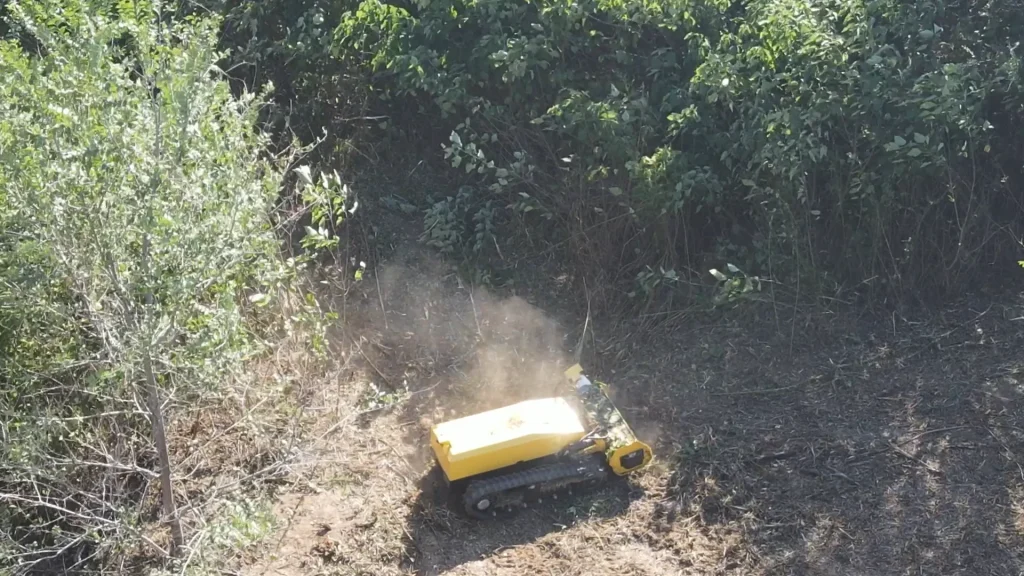
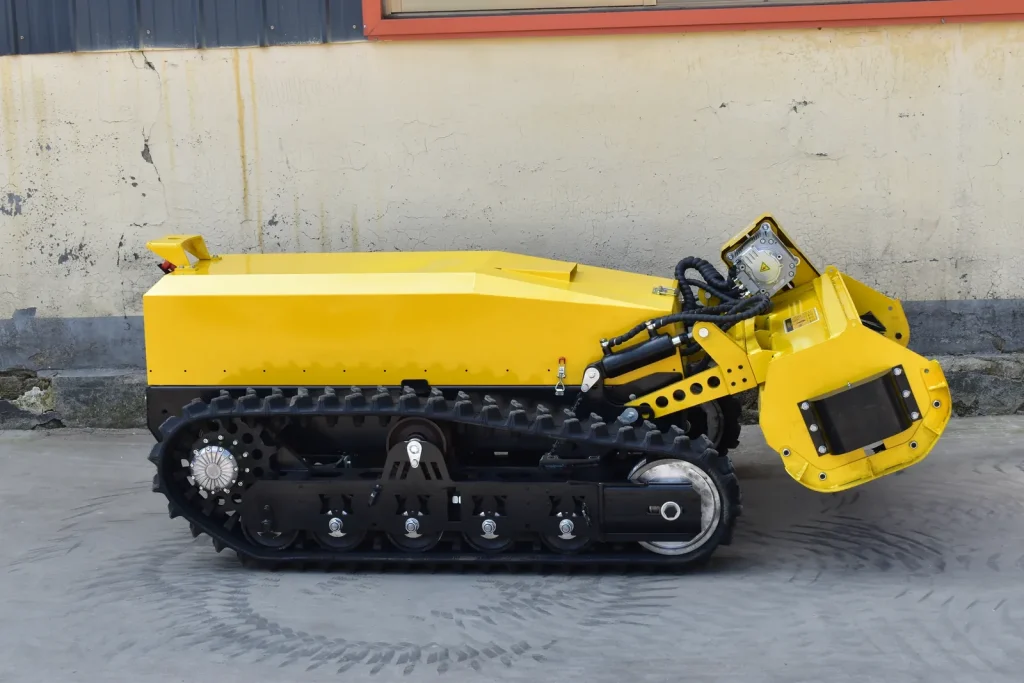
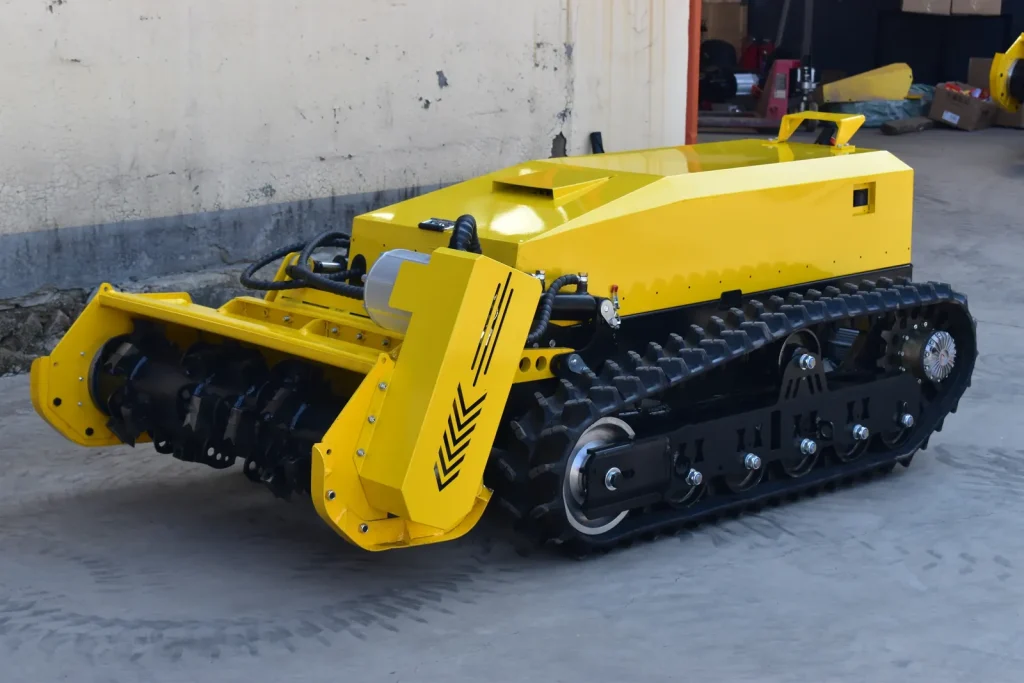
To examine this layout before an order, ask us for a photograph taken with the machine safely isolated and the drive cover removed. It should show the motor pulley, both belts and the cutting-shaft pulley. The exterior photographs here show the covered drive and cutting assembly.
Check wear across the cutting assembly
Our maintenance guidance calls for checking the belts for visible wear and replacing them when needed. Include the cutting tools and their fasteners in the inspection. A damaged belt is a reason to look at the complete drive and cutting assembly.
Before opening guards or inspecting the transmission, shut down the machine, follow its power-isolation procedure and wait for the cutting assembly to stop completely. Keep the belt drive guarded during operation.
When you contact us about a replacement belt, include the machine model, a photograph of the drive and a clear view of the belt markings. Those details help us identify the parts fitted to your machine. Use the replacement specified for that drive.
Keep the connected parts in view
A useful service photograph shows both pulleys and the belts between them. Add a close-up of the wear or damage you have found. This gives us the context to discuss the belt alongside the parts driving it and the cutting assembly it turns.
You can see more of our machine systems on the technology page. For help with your cutting drive, send us the model and photographs.