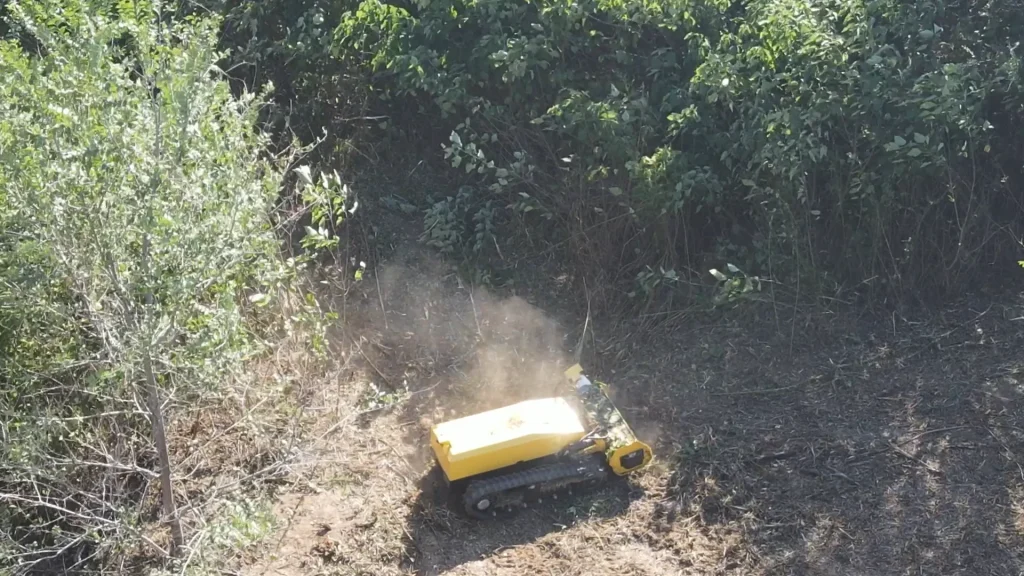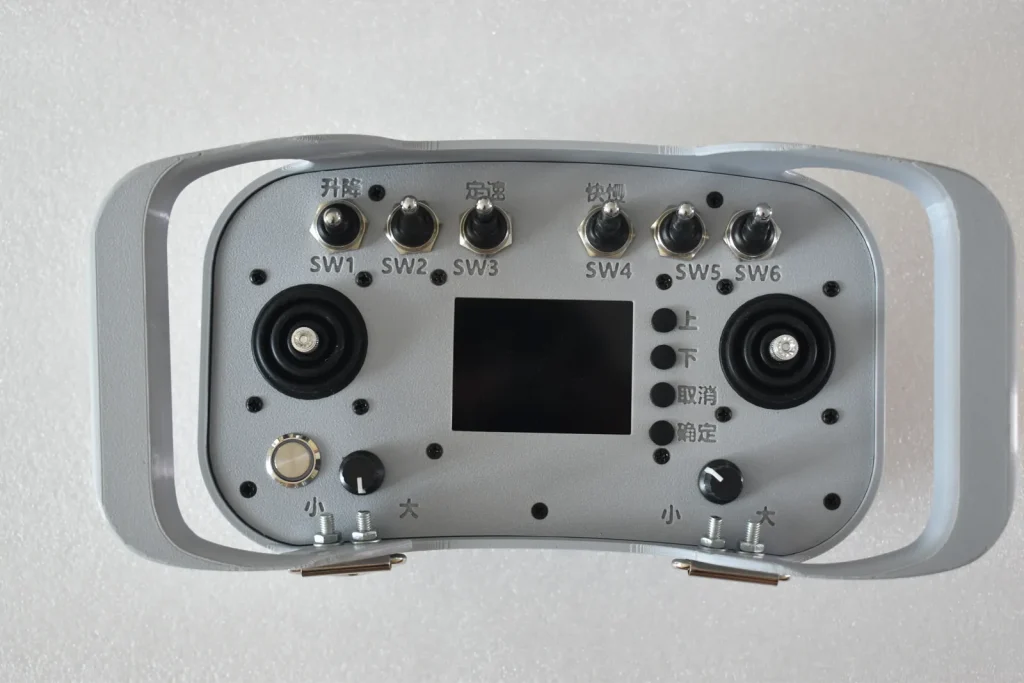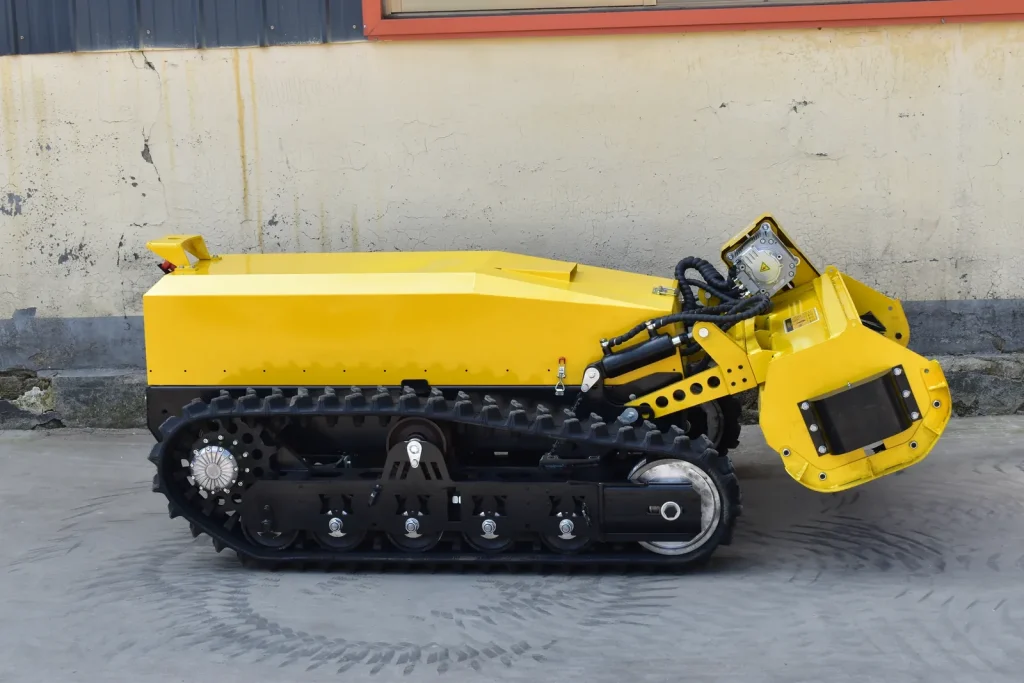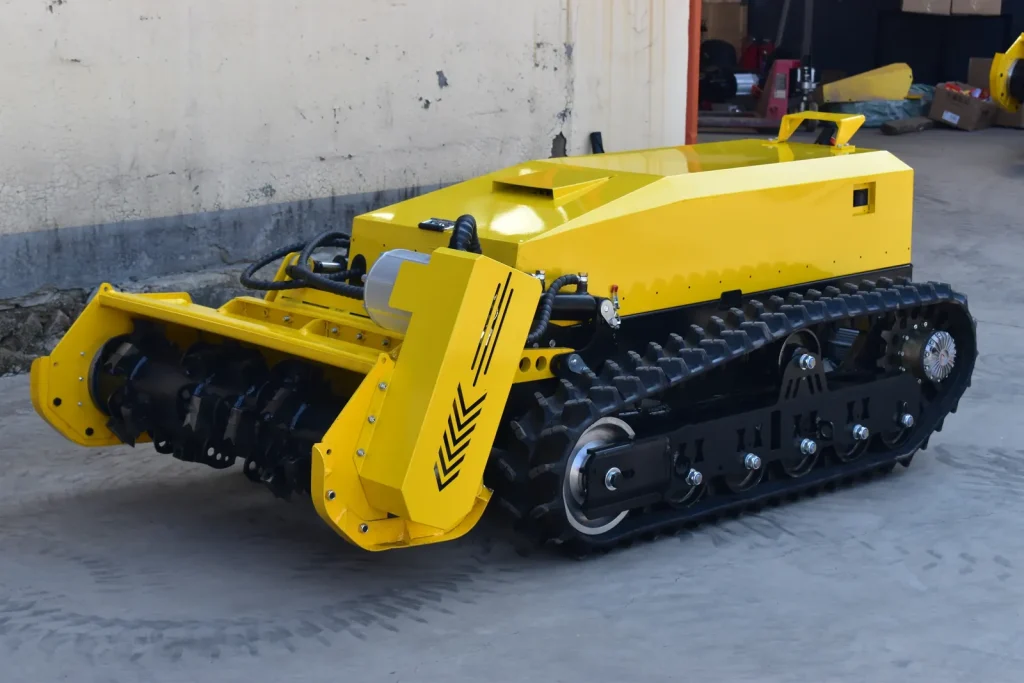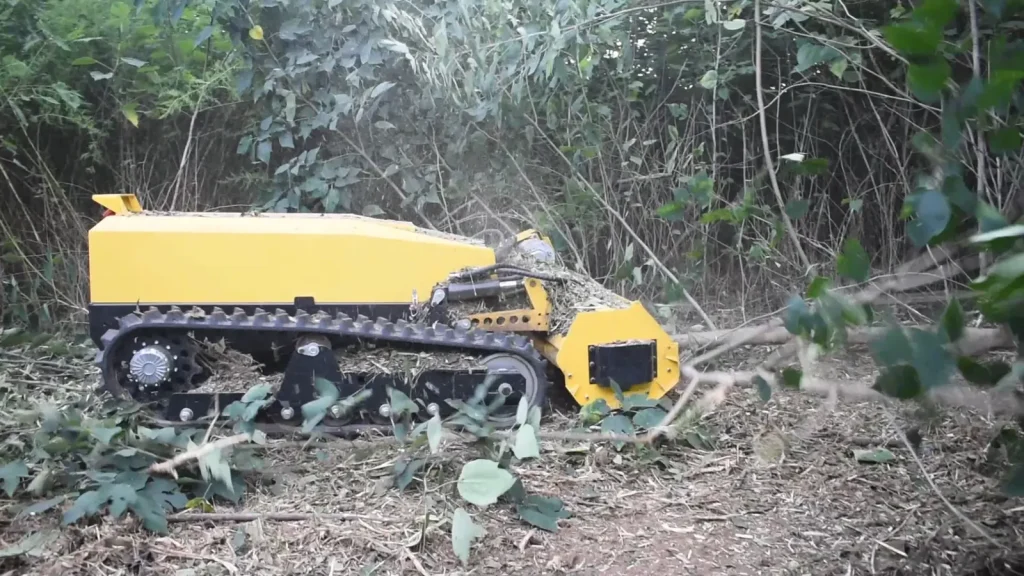

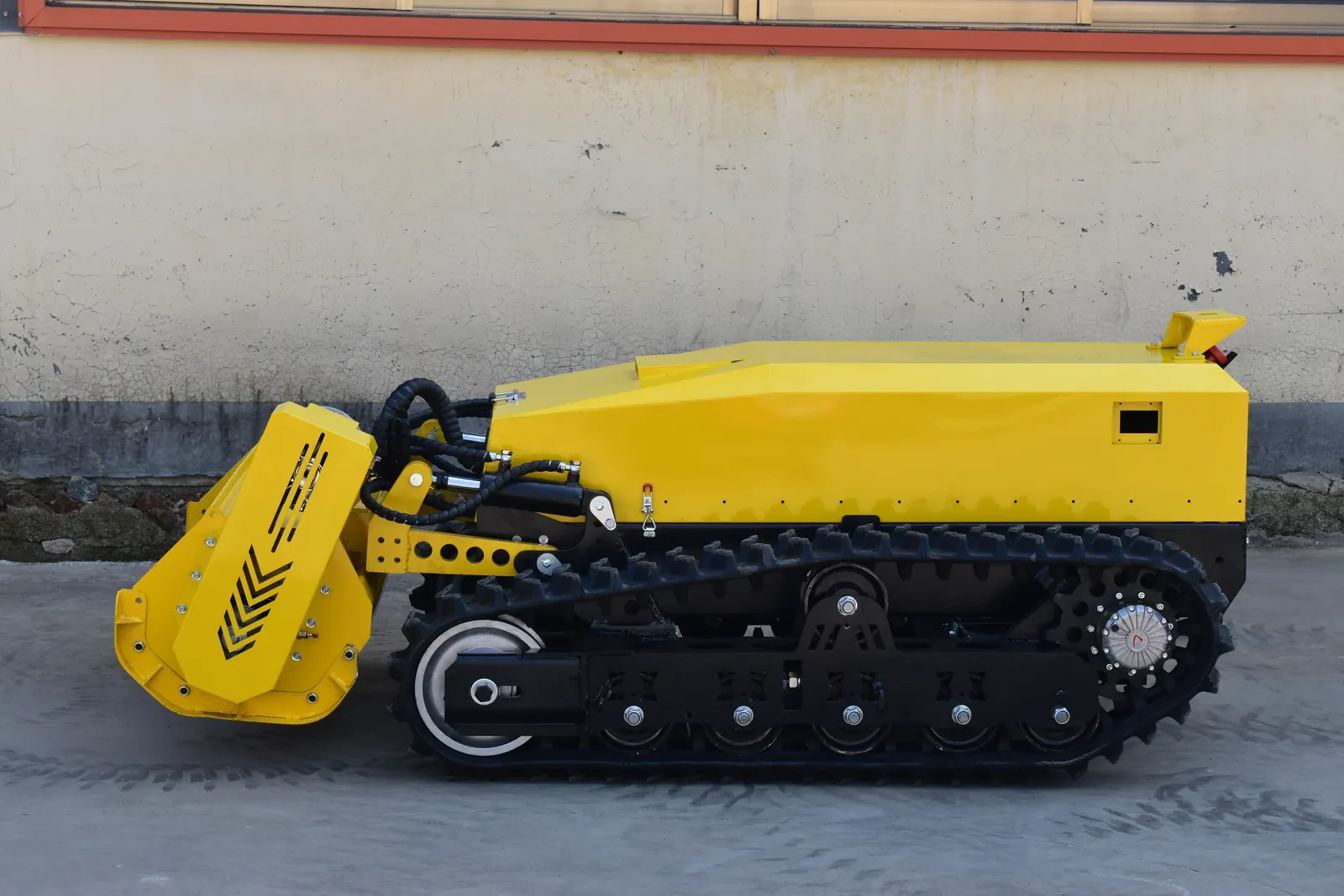
Before we start clearing, we inspect the ground and prepare the machine. The operator controls the brush cutter from a separate position and remains responsible for keeping the work area clear.
Our remote control brush cutter maintenance routine starts with a walk around the machine before switching it on. We check the blades, guards, tracks, fasteners and battery levels before the first pass.
Look at the work area first
We ask operators to remove stones, wire and other loose objects before cutting. Check the ground around the vegetation and the route the machine will take. People who are not involved in operating the machine must be kept away from the work area.
Remain attentive and keep the machine in view throughout the job. Assess the ground and choose the work according to the conditions and limits in the supplied operating instructions.
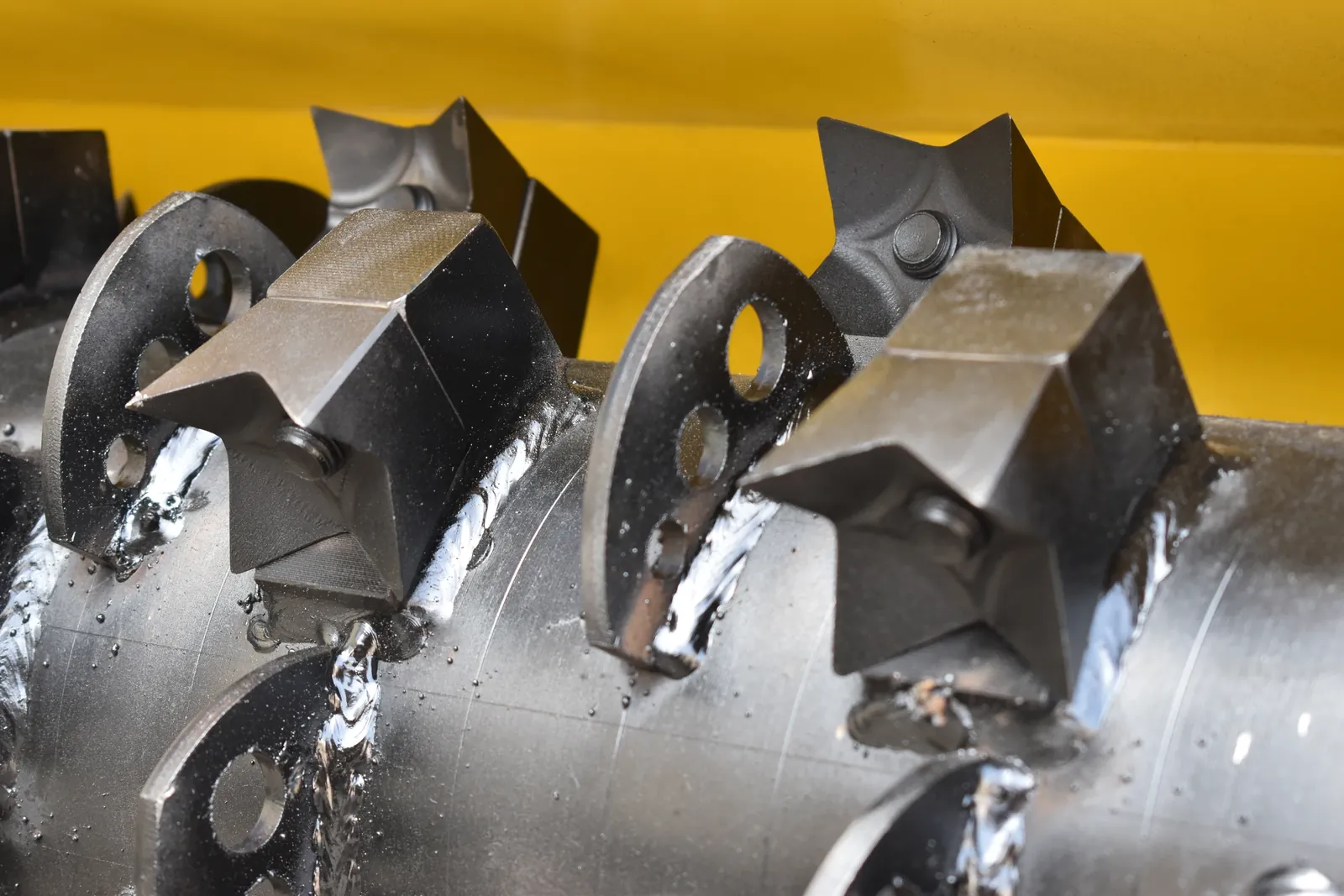
Check the cutting assembly while it is stopped
With the power off and the cutting assembly fully stopped, look for worn, damaged or missing blades. Check that the guards are secure and free from cracks, and inspect the fasteners identified in the machine’s instructions. Replace a broken or missing blade before operating.
Complete repairs before returning the machine to work. Use the parts and service procedure specified for your machine, with qualified help where the work requires it.
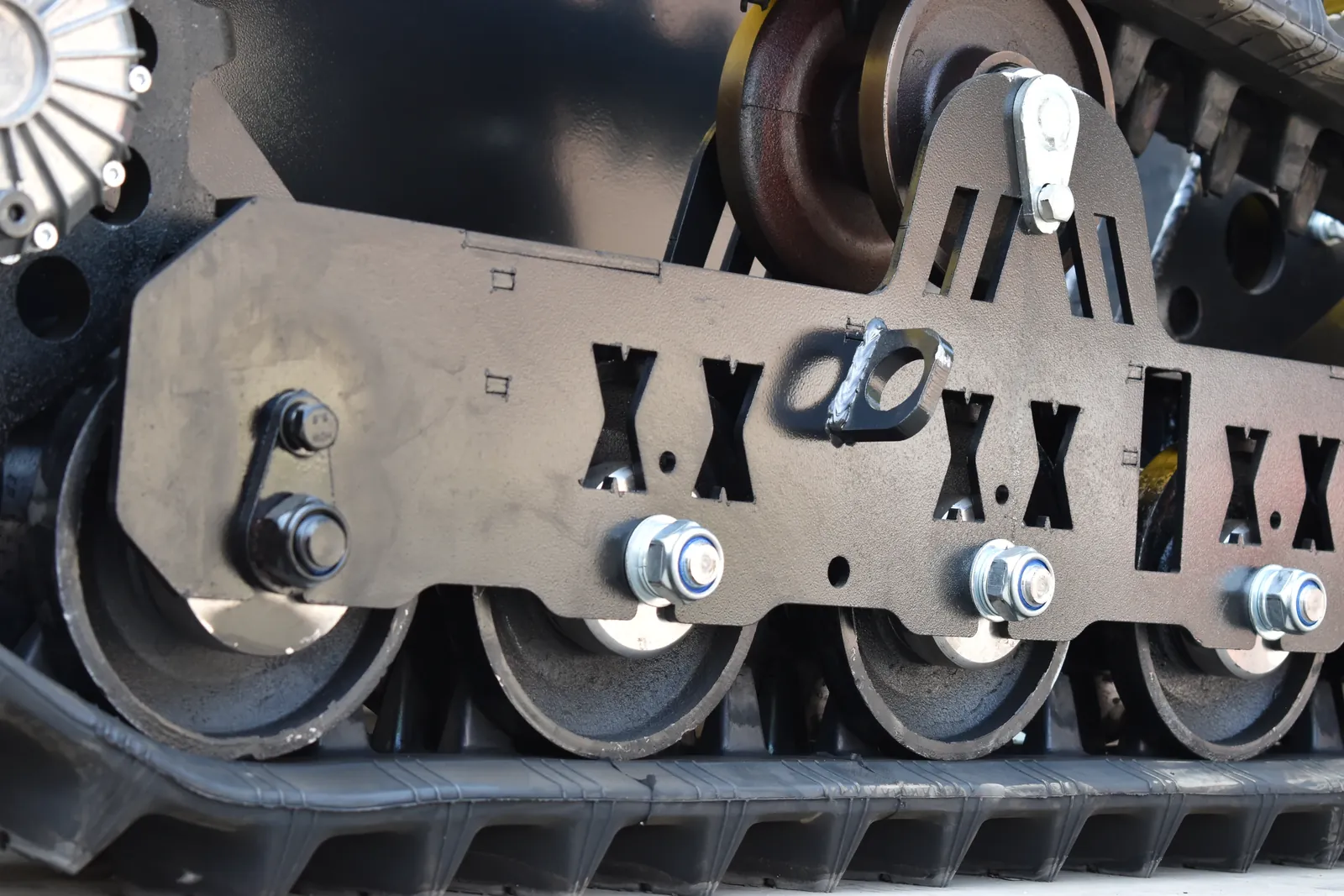
Clear the track assembly so you can see it
Clear mud and cut material from the tracks, rollers, drive wheels and idlers. With these areas visible, you can inspect the components that carry and guide the track.
We inspect the whole undercarriage, including the areas inside the track loop. Look for anything that needs service before the machine travels into the next section.
Cut vegetation around the cutting motor, housing and deck also needs attention. Do this only with the machine shut down, the rotating assembly stopped and the prescribed isolation procedure completed. Do not reach into the cutting area while the machine is running.
Check both sources of power
Check the machine battery and the handset battery separately. Each supplies a different part of the operation, and both need enough power for the planned work.
Watch the battery indications during the job as well. Follow the instructions supplied with your machine, handset and charger when charging or caring for either battery.
Keep three moments in the maintenance schedule
At the end of the job: clear cut vegetation and mud from the machine, cutting-head area and running gear. With the assembly visible, look for wear, loose fasteners or damage that needs attention before the next start.
At the service interval: inspect belt condition and attend to the lubrication points on the machine. The cutting-head bearings and travel-drive components have different service tasks. Use the matching manual to identify the points, lubricant, quantity and interval.
Before longer storage: clean the machine, protect exposed metal and follow the battery’s storage instructions. Record when the machine is put away and arrange the battery checks specified for it. Store the handset according to its battery type as well.
A useful service photograph shows the component within the machine, followed by a close view of the wear or damage. Include the machine identification and the part marking where it is readable. This gives us the information needed to identify the fitted assembly.
Our technology page shows the assemblies behind these checks. If you need the correct manual or replacement-part information for a machine in our product range, contact us with its model and identification details.