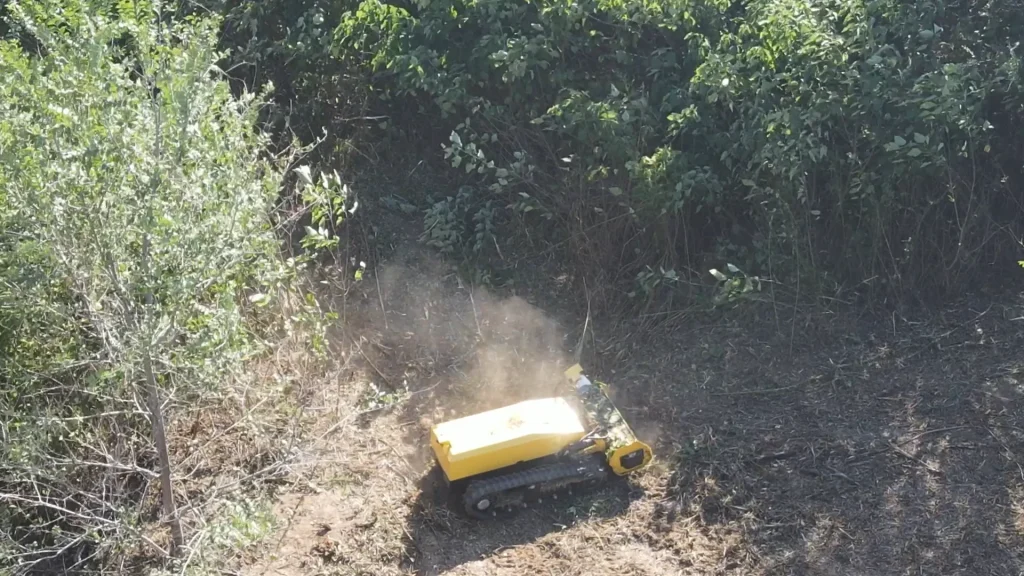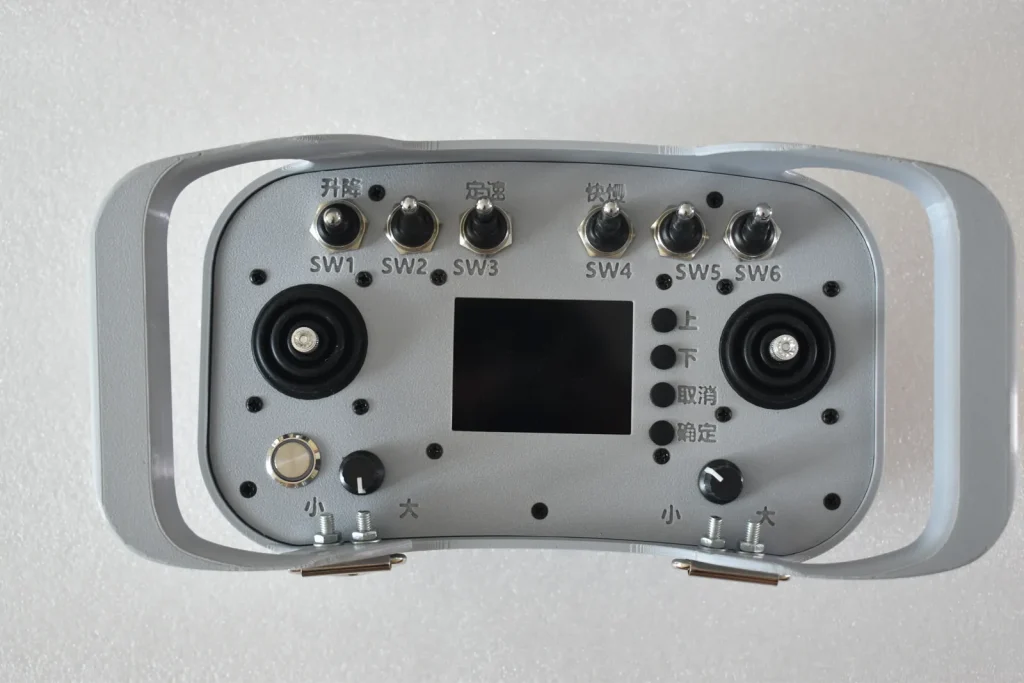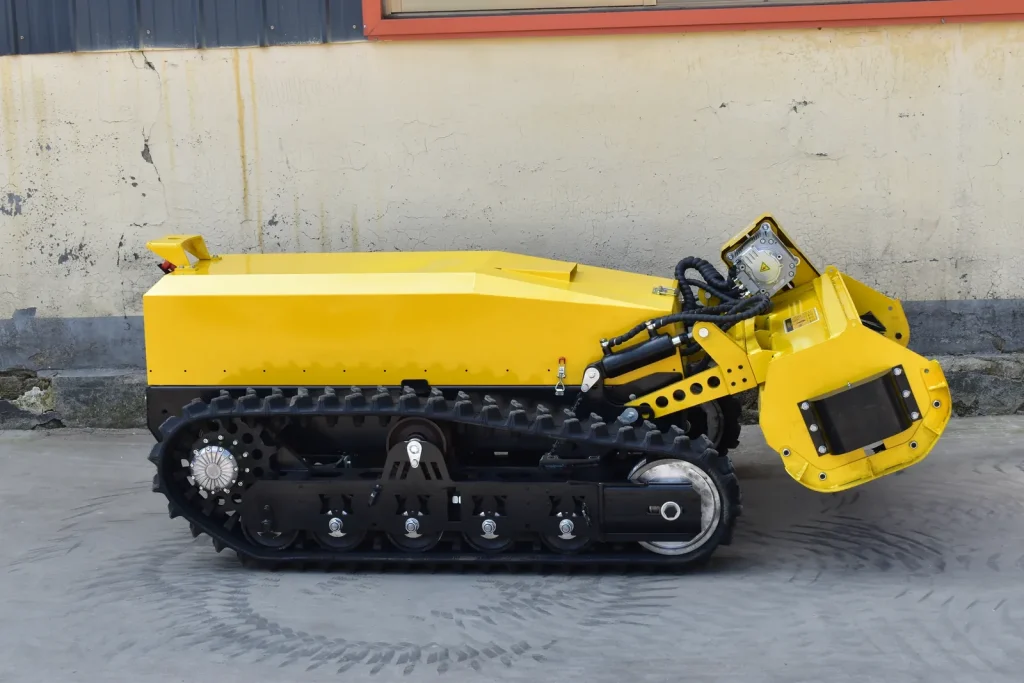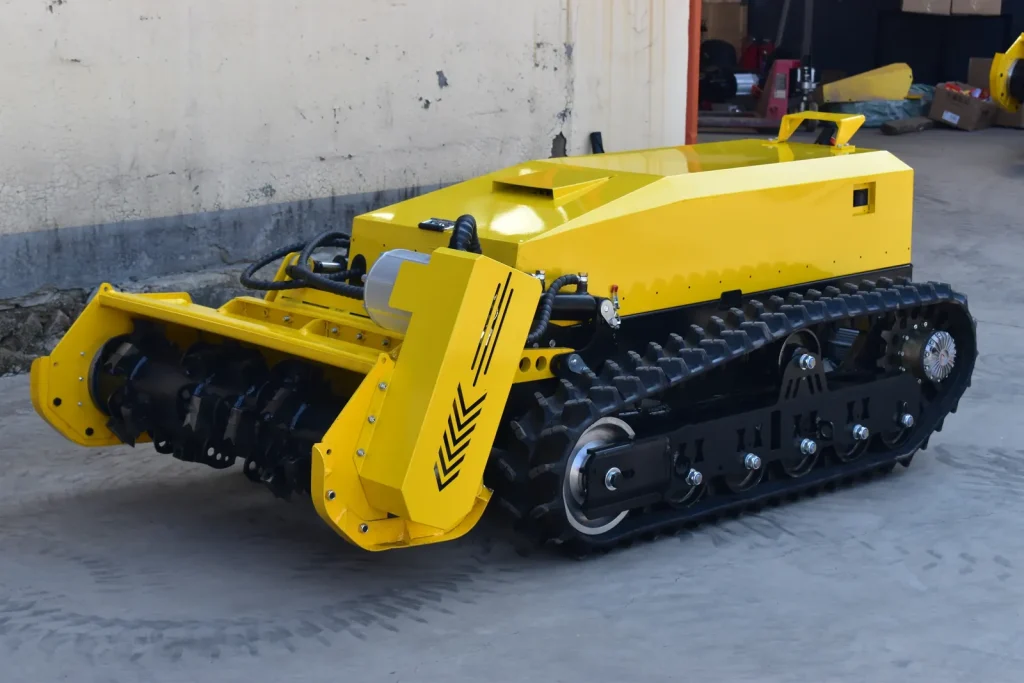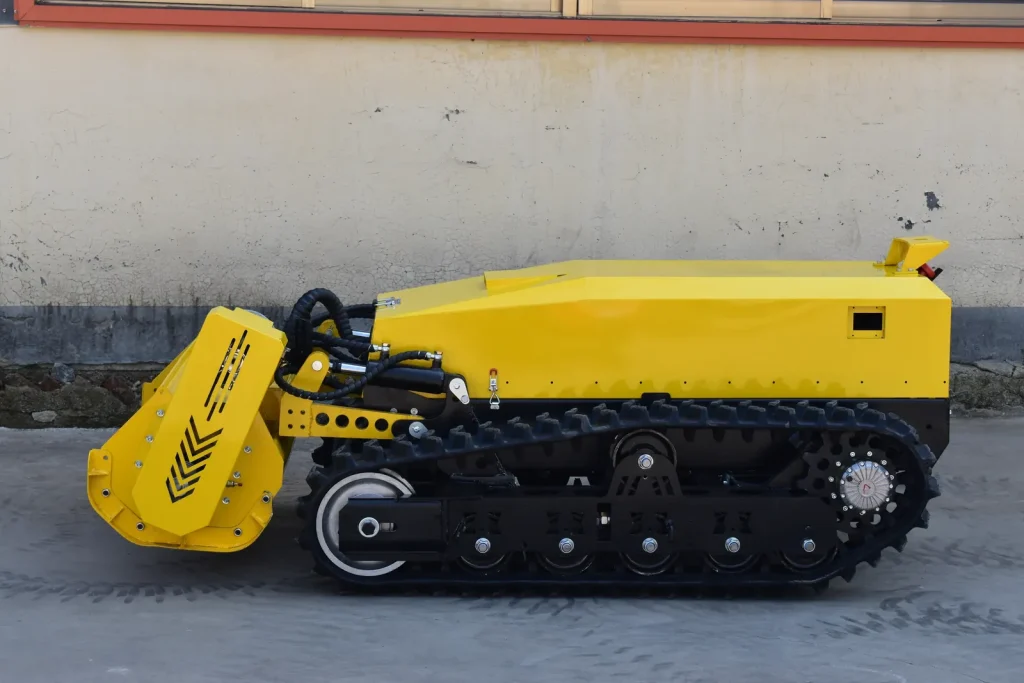

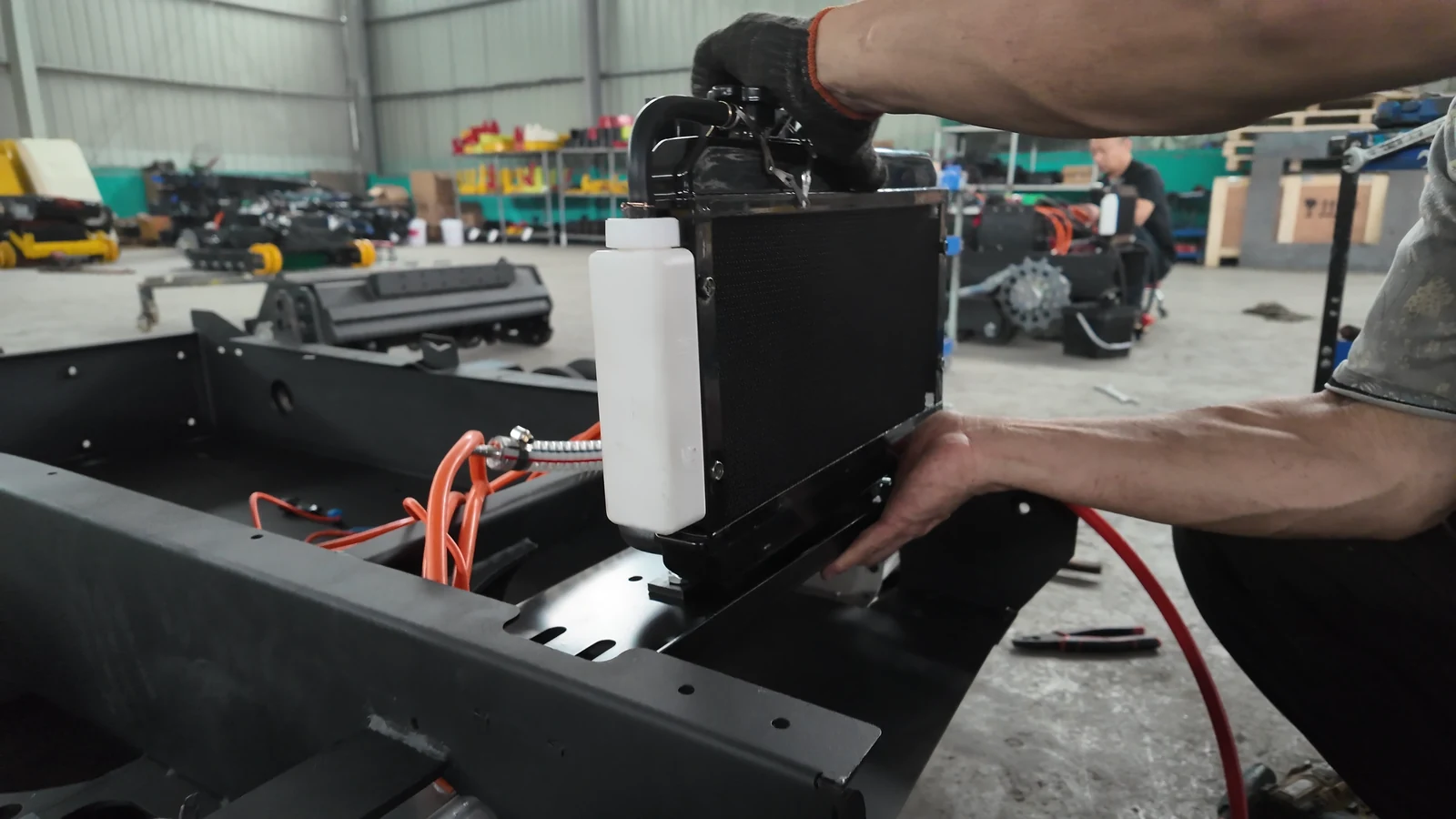
We cool the cutting motor and its controller as a connected system. The motor turns the cutting assembly, while the controller manages the electrical power supplied to it. Both generate heat during work, so both have a place in our cooling circuit.
In our liquid-cooled brush cutter, a pump circulates liquid through the controller and motor. A fan supports heat rejection. Following those connections gives a useful view of how the electrical drive handles heat during a clearing job.
Follow the heat through the machine
The cutting load changes as the head moves through vegetation. A pass can take the rotor from open grass into thicker growth. The motor converts electrical energy into motion, and some energy becomes heat in the motor and power electronics.
The pump keeps cooling liquid moving through the circuit. The fan helps that heat leave the system. We consider the motor, controller, circulation pump and fan together because each contributes to the cooling path.
Cooling also answers a different question from battery capacity. Battery energy is the reserve available for work. Cooling deals with heat produced while that energy is being used. When comparing machines, look at the cooling circuit alongside the cutting drive and battery.
Respond to the cutting load
The operator controls how much material enters the head. Watch and listen to the cutting shaft as the machine advances. Its response gives you information about the load at the cutting assembly.
If shaft speed falls under load, move back out of that load and let the cutting assembly recover speed before continuing. This is part of our operating guidance for the brush cutter. The cooling circuit carries heat away while the operator adjusts the cut to the material ahead.
Keep the cooling area clear
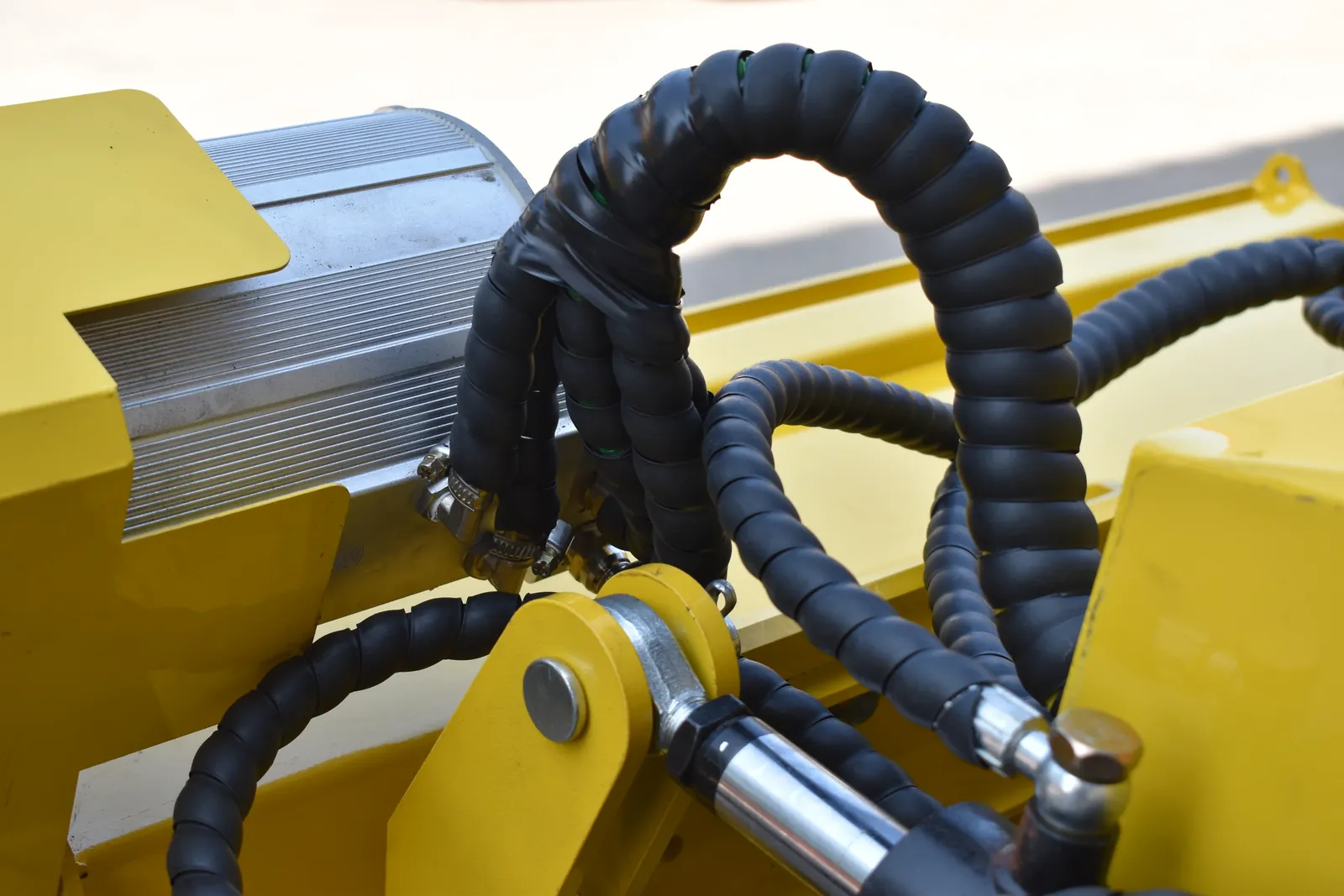
After a clearing job, inspect the area around the cutting motor. Remove accumulated branches and grass, and clear cut material and mud from the deck and machine exterior. Keeping these areas visible makes the next inspection easier.
Before cleaning or inspection, shut the machine down, follow its power-isolation procedure and wait for the cutting assembly to stop completely. Keep hands clear of the cutting assembly until that procedure is complete.
Use the service instructions supplied with your machine for coolant selection and work on the cooling circuit. If you need help identifying a part, send us the machine model and a photograph showing the motor, controller and connections together. A second, closer photograph can show the component you want to discuss.
See the complete cooling circuit
Before an order, we can show you the motor, controller and cooling connections in the machine you are considering. You should be able to follow the liquid circuit and see where the surrounding area can be inspected and kept clear.
Our technology page introduces the other machine systems. To discuss a configuration, tell us what you need to cut and how the machine will work. We can look at the cutting drive, battery and cooling together.